Explore 900+ ChatGPT prompts for affiliate marketing, organized by SEO content, product reviews, email, and social media — with real examples, data, and a buyer’s checklist for 2026.
900+ ChatGPT Prompts for Affiliate Marketing Review (2026 Guide + Free Examples)
Affiliate marketers publish more content today than at any point in the channel’s history, and most of them are doing it with an AI chatbot open in a second tab. That shift has created a new cottage industry of “prompt bundles” promising hundreds of ready-to-use ChatGPT prompts for everything from product reviews to email funnels.
But here’s the problem with most roundups of these bundles: they describe what a product claims to include without showing you what a genuinely well-built prompt actually looks like — or explaining why some prompts outperform others by a wide margin.
This guide takes a different approach. Instead of simply reviewing a prompt pack, it teaches you the prompt-writing framework affiliate marketers actually use, gives you dozens of ready-to-copy examples across every stage of the affiliate funnel, and shows you exactly how to evaluate any prompt bundle — including the popular 870-prompt collections circulating online — before you spend money on one.
Why This Topic Matters Right Now
AI adoption inside content marketing isn’t a fringe trend anymore — it’s the default workflow. ChatGPT alone had grown to roughly 900 million weekly active users by early-to-mid 2026, and OpenAI’s own usage data puts daily prompt volume at an estimated 2.5 billion prompts sent worldwide every single day (Reuters via industry usage reporting). At the same time, the affiliate marketing industry itself is scaling fast, with global market value estimated at roughly $20 billion in 2026 and projected to approach $28 billion by 2027 (Post Affiliate Pro market analysis).
Put those two numbers together and the takeaway is simple: more affiliates are competing for the same search rankings, and almost all of them have access to the same AI tools. The differentiator is no longer whether you use ChatGPT — it’s how well you prompt it.
Why Good ChatGPT Prompts Matter More Than the Tool Itself
A common misconception is that ChatGPT produces high-quality content automatically. In practice, output quality is a direct function of input quality. A vague instruction like “write a product review” tends to generate generic, surface-level copy. A structured prompt that specifies the product, audience, tone, required sections, word count, and comparison angle will consistently produce something closer to publish-ready.
This is precisely why OpenAI’s own prompt engineering documentation emphasizes giving the model clear context, explicit constraints, and examples of the desired output format (OpenAI Prompt Engineering Guide). Experienced affiliate marketers apply the same principle at scale: rather than reinventing a prompt every time they sit down to write, they maintain a personal library of tested, reusable prompt templates they can adapt in minutes.
That’s the real value proposition behind any ChatGPT prompt bundle — not magic content, but a head start on structure.
What a Quality Affiliate Marketing Prompt Library Should Include
Before evaluating any specific bundle (870-prompt packs included), it helps to know what a genuinely useful collection covers. At minimum, look for prompts across these seven categories:
- SEO content creation — blog posts, comparison articles, buying guides, evergreen content
- Keyword and search-intent research — topic clusters, question mining, competitor gap analysis
- Affiliate product reviews — honest, structured review frameworks
- Email marketing — welcome sequences, promotions, re-engagement campaigns
- Social media — platform-specific repurposing prompts
- Conversion optimization — CTAs, landing page copy, objection-handling
- Content repurposing and scaling — turning one asset into five formats
If a paid bundle is missing more than one or two of these categories, it’s incomplete relative to what’s freely achievable with a well-organized personal prompt library — which is exactly what the rest of this guide helps you build.
The Prompt-Writing Framework: C.R.A.F.T.
Before jumping into examples, it’s worth internalizing the framework strong prompts follow. Marketers and prompt engineers commonly use some variation of this five-part structure:
- C — Context: What is the product, niche, or situation?
- R — Role: Who should ChatGPT act as (e.g., “an experienced SEO copywriter”)?
- A — Audience: Who is reading the output, and what do they already know?
- F — Format: What structure, length, and style should the output take?
- T — Task: What is the specific, singular action ChatGPT should perform?
Every example prompt below is built on this structure. Once you understand the pattern, you can generate new prompts on the fly instead of depending entirely on a pre-written list.
40+ Ready-to-Use ChatGPT Prompts for Affiliate Marketing
SEO Content & Blog Post Prompts
- “Act as an SEO content strategist. Write a 1,500-word blog post outline for the keyword ‘[keyword]’, targeting a beginner audience. Include H2/H3 headings, a suggested meta title under 60 characters, and a meta description under 155 characters.”
- “Act as a content editor. Review this article draft for search intent alignment with the keyword ‘[keyword]’ and suggest three missing subtopics a competing top-10 article likely covers.”
- “Write an FAQ section (5 questions) for a blog post about ‘[topic]’, written in a conversational tone suitable for featured snippets.”
- “Create a content brief for a comparison article between ‘[Product A]’ and ‘[Product B]’, including target keyword, search intent, recommended word count, and a suggested table of comparison criteria.”
- “Generate 10 blog post title variations for the topic ‘[topic]’ optimized for click-through rate, without using clickbait phrasing.”
Keyword Research & On-Page SEO Prompts
- “Act as an SEO researcher. Generate 20 long-tail keyword variations related to ‘[seed keyword]’ grouped by search intent: informational, commercial, and transactional.”
- Create three high-CTR meta description variations for “[keyword],” keeping each under 155 characters and including an invitation to learn more or take action.
- “Suggest an internal linking structure for a niche site covering ‘[topic]’, showing which pillar page should link to which supporting articles.”
- Suggest five search-intent questions commonly linked to “[keyword]” and provide a helpful one-paragraph explanation for every question.
Discover everything you need to know about Best Free AI Tools for Bloggers in 2026.
Affiliate Product Review Prompts
- “Act as an experienced product reviewer. Write a structured, balanced review of ‘[product]’ for ‘[audience]’, covering key features, real-world benefits, limitations, ideal use cases, and a final verdict. Avoid overly promotional language.”
- “Write a pros-and-cons list for ‘[product]’ based on the following feature list: [insert features]. Keep each point to one sentence.”
- “Draft three FAQ answers addressing common objections a reader might have before buying ‘[product]’, such as pricing concerns or comparison to competitors.”
- “Rewrite this product description to sound more like an honest recommendation from an experienced user, not a sales page: [insert text].”
Buying Guide & Comparison Prompts
- “Create an outline for a ‘best [product category] for [audience]’ buying guide, including a comparison table with 5 criteria and a recommendation section for three different budgets.”
- “Write an introduction for a comparison article between ‘[Product A]’ and ‘[Product B]’ that clearly states who should choose each option and why.”
Email Marketing Prompts
- “Write a 5-email welcome sequence for new subscribers interested in ‘[niche]’, with each email having a distinct goal (introduction, value, social proof, soft pitch, hard pitch).”
- “Draft a re-engagement email for subscribers who haven’t opened an email in 60 days, offering a reason to return without sounding desperate.”
- “Write a promotional email announcing ‘[product/offer]’, including a subject line, preview text, and three CTA button variations to A/B test.”
- “Create a weekly newsletter template for a ‘[niche]’ affiliate site, including sections for a featured tip, a product recommendation, and a reader question.”
Social Media & Repurposing Prompts
- “Turn this blog post into a 6-slide carousel script for Instagram, with a hook, three value points, and a CTA slide: [insert summary].”
- “Write five Pinterest pin descriptions for a blog post about ‘[topic]’, optimized for Pinterest SEO with relevant keywords.”
- “Draft a LinkedIn post sharing the key insight from this article in a professional tone, aimed at small business owners: [insert summary].”
- “Write three short-form video scripts (30 seconds each) explaining why ‘[product]’ solves ‘[specific problem]’.”
Find detailed insights in our article on Tired of Making Pinterest Pins Manually?.
Conversion & Strategy Prompts
- “Write three landing page headline variations for ‘[offer]’ that lead with the primary benefit rather than the feature.”
- “Identify five common objections a reader might have before clicking an affiliate link for ‘[product]’ and draft a one-sentence rebuttal for each.”
- “Act as a conversion rate optimization consultant. Review this CTA copy and suggest two alternative versions with different psychological triggers (urgency, social proof, curiosity): [insert CTA].”
Save the prompts that work well for your niche in a simple spreadsheet or note-taking app, tagged by category — that alone replicates most of the organizational value that paid prompt bundles charge for.
How to Evaluate a Paid ChatGPT Prompt Bundle (Like the 870-Prompt Packs)
If you’re specifically weighing whether to buy a large prompt bundle — such as the various “800+” or “870 ChatGPT Prompts for Affiliate Marketing” collections sold online — apply this checklist before purchasing:
- Category coverage: Does it cover all seven categories listed earlier, or is it weighted heavily toward one (e.g., mostly social media prompts)?
- Customization guidance: Does it explain how to adapt each prompt to your niche, or just list raw prompt text?
- Framework transparency: Does the seller explain the underlying prompt structure, or is it a black-box list with no teaching component?
- Refund policy: Reputable digital products typically offer some form of guarantee — confirm the terms directly on the seller’s page before purchasing.
- Realistic claims: Be cautious of any bundle implying that prompts alone guarantee rankings, traffic, or income. No prompt library can substitute for content quality, backlinks, site authority, or search intent — a point echoed across virtually every credible SEO resource, including Google’s own Search Central documentation (Google Search Central: SEO Starter Guide).
A well-organized bundle can save time. It cannot replace strategy, editing, or your own subject-matter expertise.
Don’t miss our comprehensive guide on ChatGPT Expertise PLR The Complete 2026 Guide.
Common Questions About ChatGPT Prompts for Affiliate Marketing
Do I need a paid prompt bundle, or can I write my own? You can absolutely build your own library using the C.R.A.F.T. framework above. A paid bundle mainly saves the time of writing and organizing prompts yourself — it doesn’t provide capability you couldn’t otherwise access for free.
Will using these prompts guarantee higher Google rankings? No. Rankings depend on far more than content generation speed — including search intent match, content depth, backlinks, page experience, and topical authority. Treat prompts as a productivity aid, not a ranking strategy.
Can these prompts work for niches outside affiliate marketing? Yes. Most of the frameworks above — especially the SEO, email, and social prompts — are easily adaptable to SaaS marketing, e-commerce, coaching, and local business content.
Should I publish ChatGPT’s output without editing it? No. AI-generated drafts should always be fact-checked, edited for brand voice, and reviewed for accuracy before publishing. This also matters for compliance with Google’s guidance on helpful, people-first content (Google’s guidance on AI-generated content).
How many prompts do I actually need to get started? Far fewer than 870. A focused library of 20–30 well-built prompts covering your core content types (reviews, comparisons, email, and one social platform) is enough to cover most affiliate workflows. Quality and customization matter more than sheer volume.
Is ChatGPT the only AI tool worth using for affiliate content? No — many marketers pair ChatGPT with dedicated SEO research tools and editors for fact-checking and optimization. The prompt itself is only one part of a broader content workflow that includes research, drafting, editing, and publishing.
Building Your Own Prompt System: A Simple 3-Step Process
- Audit your recurring tasks. List the five content types you create most often (e.g., reviews, comparison posts, emails).
- Draft one strong prompt per task using C.R.A.F.T. Test it, refine the wording based on the output, and save the final version.
- Store and tag your prompts. Use a simple spreadsheet with columns for category, prompt text, and notes on what works best for your niche.
This process typically takes less than a weekend to complete and produces a personalized system that’s arguably more useful than a generic 870-prompt bundle, because every prompt is already tailored to your specific content style and niche.
Final Takeaway
AI has undeniably changed how affiliate content gets produced, and the data backs up just how fast that shift has happened — hundreds of millions of people now use ChatGPT weekly, and the affiliate industry itself is growing at double-digit rates. But neither trend changes the fundamentals of what makes affiliate content succeed: genuine expertise, clear search intent matching, honest reviews, and consistent publishing.
Whether you build your own prompt library using the framework in this guide or decide to purchase a pre-made bundle, treat the prompts as a starting point for your first draft — never as a finished, publish-ready product. The marketers who win with AI in 2026 aren’t the ones with the biggest prompt collection; they’re the ones who edit, fact-check, and add a perspective no chatbot can replicate.
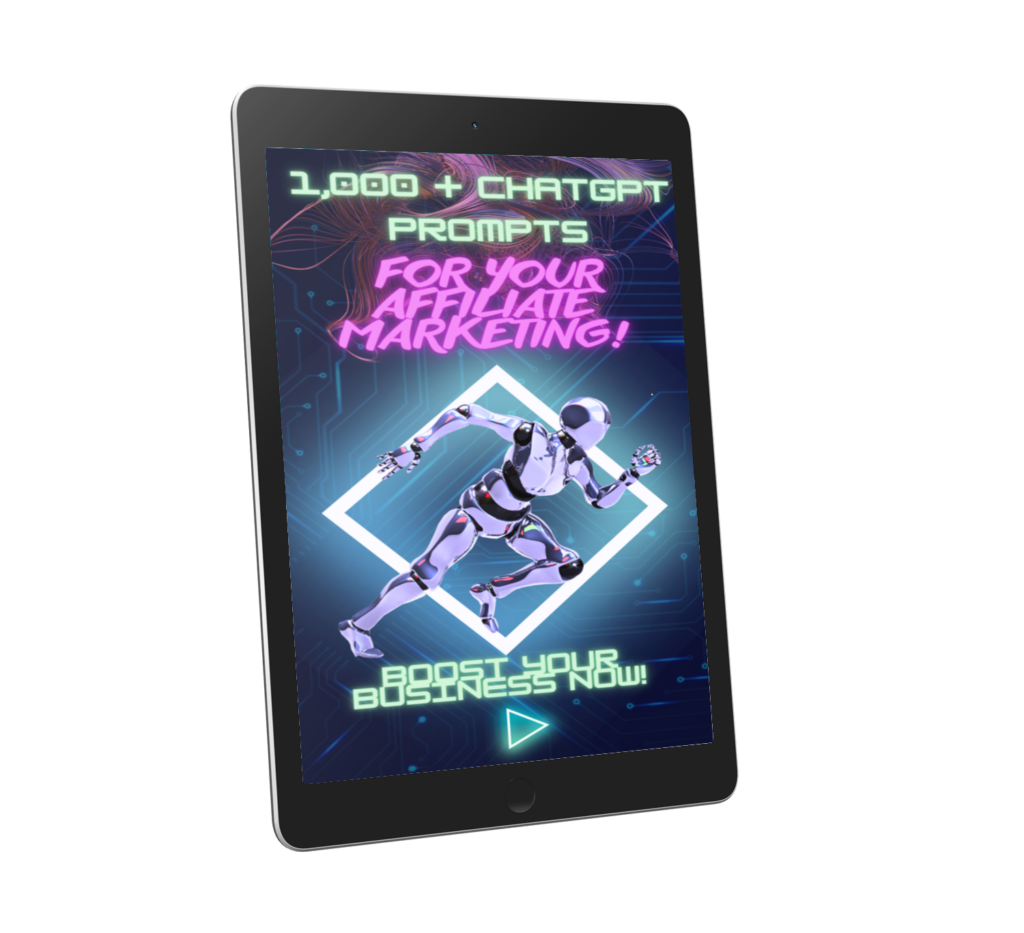
Ready to create high-converting affiliate content in minutes? Get instant access to 900+ ChatGPT Prompts for Affiliate Marketing and start writing blog posts, product reviews, emails, social media content, and SEO copy faster than ever. Stop staring at a blank page—download your copy today and grow your affiliate income smarter.
External Sources Cited
- OpenAI Prompt Engineering Guide — https://platform.openai.com/docs/guides/prompt-engineering
- Google Search Central: SEO Starter Guide — https://developers.google.com/search/docs/fundamentals/seo-starter-guide
- Google: Guidance on AI-generated content and Search — https://developers.google.com/search/blog/2023/02/google-search-and-ai-content
- Post Affiliate Pro: Affiliate Marketing Industry Size 2026–2027 — https://www.postaffiliatepro.com/blog/affiliate-marketing-industry-size-2025/
- Reuters (referenced via public ChatGPT usage reporting) — https://www.reuters.com/
Affiliate Disclosure
Transparency matters. This post contains affiliate links, which means I may earn a commission if you purchase 900+ ChatGPT Prompts for Affiliate Marketing through my links—at no extra cost to you.
I only recommend AI tools, digital products, and blogging resources that I believe can genuinely help bloggers, content creators, and affiliate marketers improve their productivity and grow their online income. Every recommendation is based on my research, experience, or evaluation of the product’s features and value.
Please do your own research before making any purchase to ensure the product meets your needs. Your support through these affiliate links helps me continue creating free, high-quality content for the AI Blogging & Online Income community. Thank you for your support!